
Estonian representatives studied Sweden’s approach to preserving identity and developing communities
Study visit of the Estonian Council for the Culture of National Minorities to Gothenburg, 11–13 October
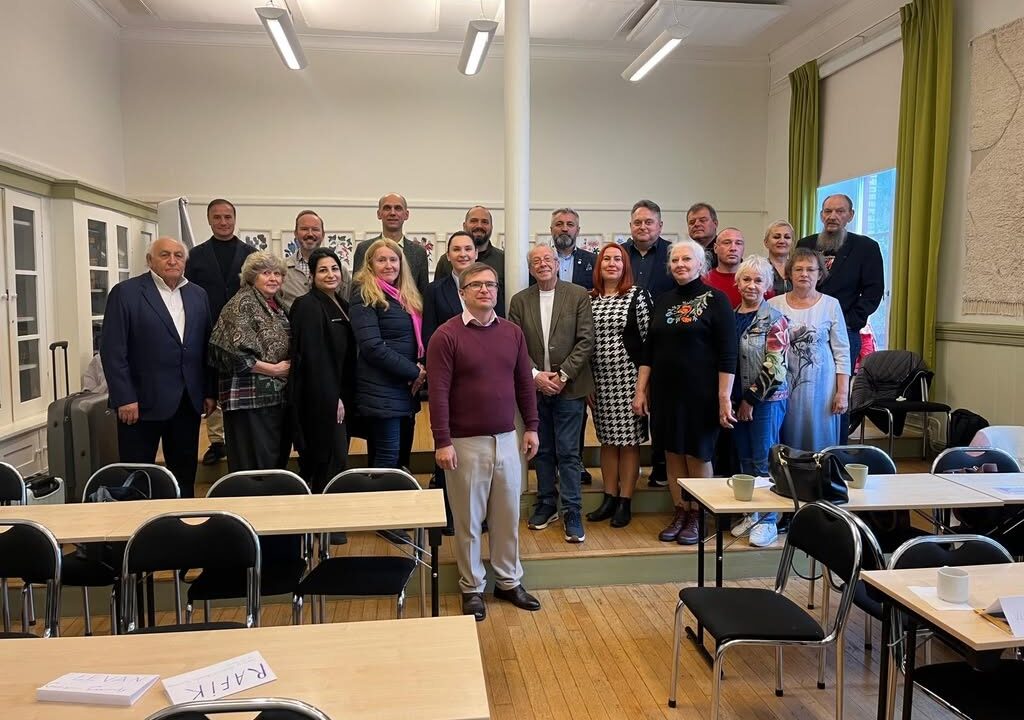
On 11–13 October, representatives of Estonia’s Council for the Culture of National Minorities made a study visit to Gothenburg, Sweden. Volodymyr Palamar represented the Ukrainian community of Estonia. The aim of the trip was to learn how Sweden supports national minorities, develops cultural and educational initiatives and builds cooperation between civil society organisations and local authorities.
Over three days, the delegation met representatives of municipal institutions, national communities, educational organisations and cultural centres. The programme began at the Estonian House in Gothenburg, where participants heard about the history of Sweden’s Estonian community and about preserving identity in emigration.
The main topic was language education. Local communities spoke about a shortage of teachers, limited opportunities to learn the native language and children gradually switching to the language of their country of residence. Swedish colleagues stressed that the language must be heard not only in lessons but also in everyday communication, creative work, sports and youth initiatives.
Representatives of the Gothenburg administration described advisory councils, regular meetings with civil society organisations and monitoring of how decisions are carried out. The Roma advisory council, for instance, identifies priority problems, discusses them with politicians and officials and evaluates the results.
The delegation also visited the educational organisation Studieförbundet Vuxenskolan, which works in non-formal education and in support of cultural diversity, and the cultural centre Kulturhuset Bergsjön, with its library, children’s readings, film screenings and workshops. Of particular interest were initiatives in which young people create cultural projects themselves, including paid participation.
Swedish organisations also named shared challenges: unstable funding, dependence on short-term projects, a lack of qualified specialists and a heavy administrative burden.
For Ukrainian organisations in Estonia, this is most useful for developing Ukrainian-language education, youth programmes and partnerships with state and municipal institutions. At the same time, it is important to combine preserving the Ukrainian language, history and traditions with learning Estonian and taking an active part in public life.
The visit took place with the support of the Estonian Ministry of Culture and the Integration Foundation (Integratsiooni Sihtasutus), with the participation of Gothenburg’s local authorities, Studieförbundet Vuxenskolan and cultural and library institutions.
Directions that could be useful for Estonia’s communities, including the Ukrainian one, are expanding non-formal education, involving young people in community activities, creating accessible cultural spaces and improving cooperation with the authorities.